The battlefields, forts and earthworks of the Civil War in Tennessee.
The Story
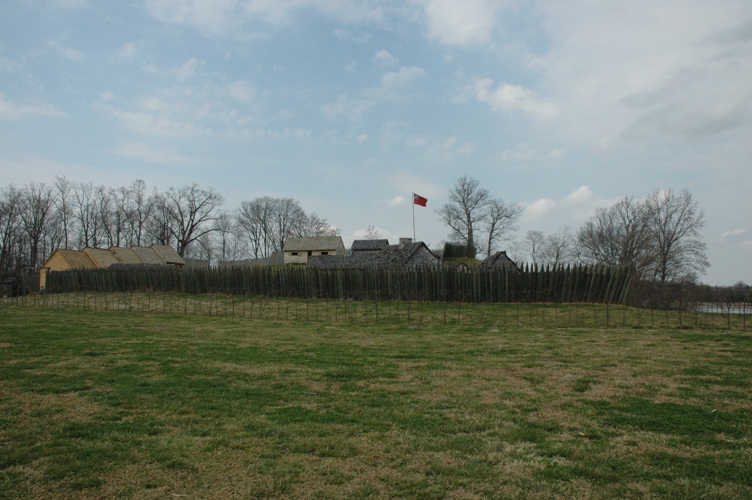
Fort Loudoun stood on the Little Tennessee River's south bank near Vonore in Monroe County. Built beginning in 1756 under Captain Raymond Demere, after the Overhill Cherokee had asked the English for a fort as early as 1746, it was garrisoned until 1760. The fort helped bind the Cherokee to the English at the most critical point of the war with France, shielding the southern frontier while English armies in the North defeated the French. The log stockade, laid out as a four-pointed star, burned in 1761. Guided by archaeology, the palisade and earthworks were later rebuilt on the roughly 50-acre state-owned site. It was listed for colonial settlement history.
Source: National Register nomination 66000729 (NPS)
About this site
Fort Loudoun is a civil war site in Vonore, Monroe County. It is one of 71 historic sites cataloged in Monroe County on TennRoam.
The site sits at 35.5965, -84.2030 near Vonore. The nearest cataloged historic site is Fort Loudoun (historical marker), about 0.2 miles away. Others within a short drive include Welcome to Fort Loudoun State Historic Area, Tellico Blockhouse Site, and Tellico Blockhouse.
This record is drawn from the National Register of Historic Places (Tennessee Historic Preservation Office and National Park Service). Use the map below for its exact position and turn-by-turn directions.
Fort Loudoun was built in 1756 and 1757 in what is now Monroe County, and was named for John Campbell, Earl of Loudoun, then British commander in North America. Engineer John William Gerard De Brahm designed it, though he and the first commander, Captain Raymond Demere, disagreed over its site and plan. Its garrison of about 200 South Carolina provincials and British regulars guarded the alliance with the Cherokee. The Cherokee besieged the fort in March 1760, and by summer food ran critically low. On August 9, 1760, about 180 men and 60 women and children surrendered under terms. The next day, about 700 Cherokee attacked the column near Tellico Plains, killing three officers, 23 soldiers and three women. Fort Loudoun State Historic Area now includes a replica of the fort as it stood in 1759 and 1760.
Get TennRoam — 22,000+ historic sites in your pocket
See this site and every marker, battlefield, cemetery, courthouse, museum and landmark across Tennessee on one live map — find what's near you, get directions, and collect sites as you roam.